
Why Is My Exhaust Rattling?
Our exhaust systems carry out several important responsibilities in our vehicles, including quieting engine noise, monitoring combustion efficiency, and removing harmful pollutants from exhaust gases. After years of driving, you’ve probably developed an idea of what it should sound like when the exhaust is operating properly. When an issue arises in the system, such as a rattling or pinging noise or an increase in engine noise, it’s generally hard to miss.
Where’s That Sound Coming From?
Though the exhaust system is a fairly simple one, various potential failure points could lead to a rattling noise while driving.
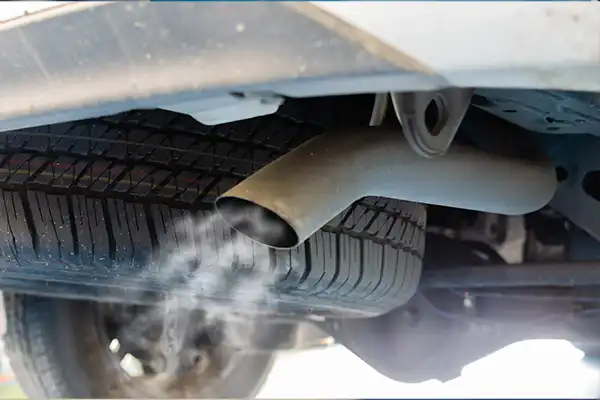
Exhaust Leak
The exhaust system relies on airtight seals and connections to ensure the fumes follow the correct path out of the vehicle and through the necessary noise-reducing and emission-reducing components.
Leaks can develop in your exhaust system for a few reasons, such as rust spots, collisions, or the failure of hardware or gaskets. The resulting sound varies considerably depending on the locations and size of the leak, but in some cases, it can resemble a ringing or rattling noise during acceleration.
If the leak occurs within or before the catalytic converter, it will also result in the release of harmful exhaust byproducts into the atmosphere and can prevent you from passing emissions testing in applicable areas.
Faulty Catalytic Converter
Catalytic converters are exhaust components that use a catalyst made of precious metals like platinum, palladium, or rhodium to react with exhaust pollutants and remove harmful compounds before being released into the atmosphere from your tailpipe.
The catalyst is arranged in a honeycomb grid that allows for exhaust gases to pass through. Whether through external damage, old age, or excessive backfire from the engine, pieces of the catalyst can detach and become loose within the catalytic converter. This debris will be trapped within the component, rattling around like a marble in a tin can as it’s blown around.
Beyond the frustrating noise, a broken catalyst honeycomb can block the exhaust’s path and even prevent the vehicle from running properly. It’s important to have a broken catalytic converter replaced before it can cause more significant issues.
Loose Heat Shield
One of the more common causes of rattling noises is a loose heat shield covering an exhaust component. Heat shields protect our mufflers, resonator, and catalytic converter from road debris while preventing the hot component from being exposed to any flammable material below or above it. Over time, the hardware holding this thin metal shield can rust away or become loosened, allowing the heat shield to vibrate against the hardware or other components. A loose heat shield isn’t too pressing of an issue; however, if the shield becomes fully detached, it may lead to a fire hazard.
Broken Exhaust Hanger
The hangers in your exhaust system are what connect the system to the bottom of your vehicle, holding it in place and absorbing vibrations. When one of these hangers loosens or breaks, it allows your exhaust components to shift and vibrate, causing a rattling noise that may worsen at certain RPM ranges. The good news is, hangers are generally inexpensive and simple to replace. You should have your broken hanger replaced before the vibrations cause further issues in your exhaust system.
Exhaust Services in Tucson, AZ
If you’re experiencing issues with a rattling exhaust or anything similar, you need to bring your vehicle in for professional service. Many exhaust issues can be minor, but can grow into big problems down the line if left untreated. Bring your vehicle to Micro Import Service to meet our experienced technicians who will help you with every step of the service process. Call or schedule an appointment online today!